


Luxury sex toys earn their price when you use a toy often, want a specific sensation only a proprietary mechanism delivers, or value a genuine multi-year warranty. If you’re new to toys, unsure what you like, or an occasional user, a mid-range option usually gets you 80 to 90 percent of the experience for a fraction of the cost. The right call depends less on your budget and more on fit, frequency, and what you’re actually chasing.
TL;DR:
- High-end sex toys typically last longer, maintain performance better, and offer proprietary features like pressure sensors or advanced vibration modes that justify their higher cost.
- Materials such as platinum-cured silicone or medical-grade glass provide greater durability and safety, but only if paired with proper lubricant and maintenance practices.
- Longer warranties, especially those extending to ten years, significantly reduce lifetime costs and the risk of motor failure or material breakdown over time.
- For occasional users or those new to sex toys, mid-range options often deliver most sensations without the premium price tag, making them a more sensible starting point.
- Actual value depends heavily on expected use, with frequent and long-term use benefitting more from luxury features and durable engineering.
Table of Contents
- Quick checklist: when to splurge and when to save
- The technical and material factors that actually justify higher prices
- Who benefits most from splurging (and what to prioritise)
- Cost-per-use, expected lifespan and how to judge value for money
- Practical buying, compatibility and maintenance advice
- Playhause guidance for sensible splurging
- The psychological and emotional benefits of using luxury sex toys
- Common misconceptions about luxury sex toys and the premium price
- My honest take on where the money actually goes
- How Playhause makes finding the right premium toy easier
- Sources
Quick checklist: when to splurge and when to save
You don’t need a sexology degree to make this decision well. You need five honest answers about how you’ll actually use the toy, not how you imagine using it in a perfect world.
Run through this before you spend anything over £100:
- Frequency of use: Will this be a weekly (or more) part of your routine, or an occasional treat? Daily and weekly users wear out cheap motors fast, and that’s exactly where luxury engineering earns its keep.
- Unique technology: Does the toy offer a mechanism you genuinely can’t get elsewhere, such as pressure-sensing suction or a patented pulsation pattern, or is it a familiar function with a nicer shell?
- Warranty length: A one-year warranty on a £150 toy is a red flag. A three-to-ten-year warranty changes the maths entirely, because it effectively insures your purchase against the most common failure point: the motor.
- Ergonomics and control simplicity: Can you operate it one-handed, in the dark, without checking a manual? Good ergonomics are expensive to design and cheap to skip, so this is often where budget toys cut corners first.
- Resale or long-term value: Sex toys aren’t resold, obviously, but “value retention” here means whether the toy still performs the same after 18 months of regular use, or whether the motor has already gone quiet.
Here’s the trade-off in plain terms: a £35 bullet vibrator with a decent motor might satisfy someone who uses it twice a month. That same person spending £180 on a premium version is likely paying for refinement they’ll rarely notice at that frequency. Flip it around, and someone using a toy several times a week for a year will feel every difference in motor torque, battery degradation, and button wear, sometimes within months.
Pro Tip: Before buying anything premium, list the three sensations or features you actually want. If you can’t name them specifically, you’re not ready to pay a premium for them.
The honest starting point for anyone asking whether luxury sex toys are worth it is that a high price alone proves nothing. Sexperts consistently point out that premium features like app connectivity or extra vibration modes only justify their cost if they genuinely change your experience, not because a bigger price tag implies better pleasure by default.
The technical and material factors that actually justify higher prices
Here’s where the price difference actually lives, and it’s rarely where people assume.
Materials: what platinum-cured silicone actually buys you
Medical-grade silicone and platinum-cured silicone are both body-safe, but they’re not identical in practice. Platinum-cured silicone tends to be denser, more resistant to tearing, and less likely to develop a tacky surface over years of use and cleaning. Stainless steel and medical-grade glass sit at the other end of the durability spectrum: they’re essentially inert, non-porous, and can handle any water-based or oil-based lubricant without the compatibility worries silicone toys carry. The catch with silicone is that it reacts badly with silicone-based lubricant, degrading the surface over time, so choosing the right lube matters as much as the toy itself.
Motors: the difference between rumbly and buzzy
Cheap motors tend to produce a high-frequency “buzzy” vibration that sits on the surface of the skin. Better motors, often using linear resonant actuators, produce a deeper “rumbly” vibration that penetrates tissue more effectively, which is why two toys with the same stated vibration speed can feel completely different. Higher-torque motors also handle sustained pressure without stalling, which matters enormously for toys designed to be pressed firmly against the body. According to The Strategist’s breakdown of cheap versus expensive toys, motor engineering and material quality are the two biggest reasons luxury toys command higher prices, and both directly affect how long a toy lasts.
Battery, charging, and waterproofing
Rechargeable lithium batteries in premium toys typically hold their charge better over hundreds of cycles than the batteries in budget models, which often show noticeable power loss within a year. Charging port design matters too: magnetic charging cables reduce the risk of water damage compared with exposed USB ports, and a genuinely waterproof toy needs a sealed charging mechanism, not just a snug-fitting cap.
Ergonomics and the parts nobody photographs
Button layout, motor noise, and one-handed usability are unglamorous but expensive to get right. A toy with two clearly differentiated buttons, felt easily in low light, reflects real usability testing. A toy with a single unmarked button cycling through fifteen confusing patterns usually reflects a company that spent its budget elsewhere. Quiet motors also require better internal dampening, which adds cost but matters hugely for anyone sharing walls or a bed.
Statistic to weigh: Editorial testing at GQ found that mid-range toys often deliver the bulk of the sensation available at a given price point, and luxury models are largely charging for the final 10 to 20 percent of refinement, things like proprietary pressure-sensing tech and marginally superior materials.
Warranty and repair: the hidden value driver
A toy with a ten-year warranty and an accessible repair programme effectively removes your risk of buying a lemon. If the motor fails in year three, you get a replacement or repair rather than a bin trip and another £150 spent. This is arguably the single most underrated luxury feature, because it converts an unpredictable expense into a fixed one.
- Warranty length under 1 year: budget tier, expect to replace on failure
- Warranty length 1 to 3 years: mid-range, some protection against early failure
- Warranty length 3 to 10 years: luxury tier, meaningfully reduces lifetime cost
Who benefits most from splurging (and what to prioritise)
Not every buyer needs the same features, and matching your profile to the right priority saves you from paying for refinements you’ll never notice.
-
Frequent solo users. If you’re reaching for a toy several times a week, durability and battery life stop being nice-to-haves and become the whole point. A motor built to run daily for years, paired with a warranty that actually covers motor failure, pays for itself compared to replacing a £40 toy every eight months.
-
People chasing a specific, unusual sensation. Air-pulse suction, precise pulsation rhythms, and pressure-adaptive technology are genuinely hard to replicate cheaply. Insight from testers at GQ notes that certain proprietary mechanisms, like pressure-compensating suction features, deliver results that budget copies simply don’t reproduce. If you’ve tried a specific sensation and loved it, the original is usually worth chasing rather than gambling on an imitation.
-
Couples and long-distance partners using app-connected or remote-control toys. This is where price differences get complicated fast, because you’re not just paying for a motor, you’re paying for software support. A remote-controlled toy needs reliable Bluetooth range, ongoing firmware updates, and a privacy policy you can actually trust with intimate data. Budget app-connected toys frequently cut corners here, with laggy connections or apps that stop receiving updates within a year. For couples exploring shared play, that reliability is often worth more than any extra vibration mode.
-
People new to toys, or occasional users. This is the group most likely to overspend for no real gain. If you don’t yet know whether you prefer strong, focused vibration or broad, diffuse pressure, spending £200 on your first purchase is a guess dressed up as an investment. Sexologists and toy educators generally recommend starting with a smaller, well-reviewed collection to learn your preferences before committing to a premium piece, which also applies if you’re exploring toys designed for men for the first time.
Pro Tip: If you’re torn between two price tiers, buy the cheaper option first. You’ll learn more about your own preferences from one honest month of use than from any product description.
Cost-per-use, expected lifespan and how to judge value for money
Price alone tells you almost nothing. Cost-per-use tells you everything, and it’s a genuinely simple calculation.
Cost-per-use = purchase price ÷ number of times you expect to use it before it needs replacing.
Take a working example. A £45 budget vibrator with a typical lifespan of 18 months, used twice a week, gets roughly 156 uses. That’s around £0.29 per use. A £180 luxury vibrator with the same twice-weekly frequency but a five-year lifespan gets around 520 uses, working out to roughly £0.35 per use. The gap narrows dramatically once you factor in realistic lifespan, and in some cases the luxury option actually comes out cheaper per use over its full life.
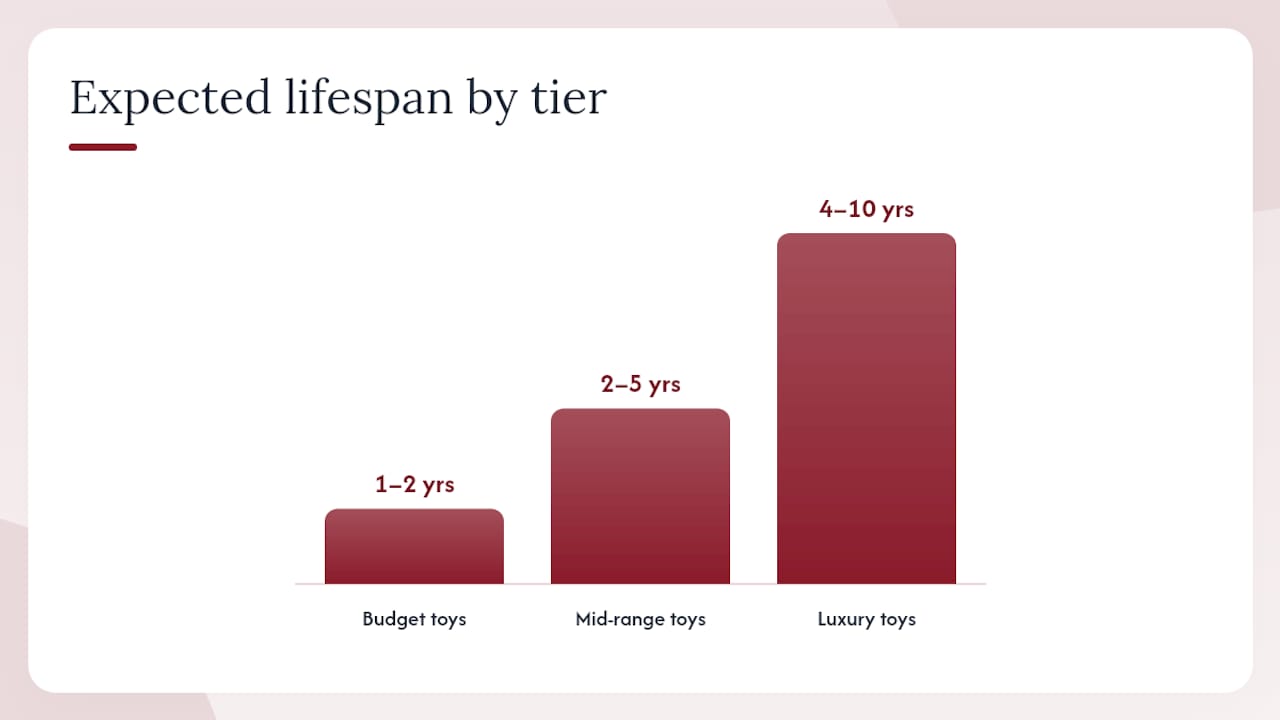
Lifespan estimates vary by build quality, but as a rough guide:
- Budget toys: 1 to 2 years before motor degradation or material breakdown becomes noticeable
- Mid-range toys: 2 to 5 years with moderate, careful use
- Luxury toys: 4 to 10 years, particularly when covered by an active warranty and built with platinum-cured silicone or metal components
That range holds up against testing that shows material quality and motor engineering directly drive longevity, and it’s echoed by warranty data from luxury vibrator reviews, which found that five to ten year warranty terms are common at the top of the market and materially change the lifetime cost calculation.
Warranty terms change your maths in a second, less obvious way too. If a manufacturer replaces failed units free of charge within the warranty period, your effective lifespan for cost-per-use purposes extends to the warranty length itself, not the toy’s actual physical durability. A £160 toy with a seven-year warranty that gets replaced once at year four effectively delivers 14 years of protected use for the price of one purchase.
Practical buying, compatibility and maintenance advice
Getting the value out of a luxury toy depends almost entirely on how you buy and care for it, not just what you buy.
Start with the material specification, not the marketing copy. Look for the words “platinum-cured silicone,” “medical-grade silicone,” “surgical stainless steel,” or “borosilicate glass” listed explicitly. Vague terms like “body-safe material” with no further detail are a warning sign, often meaning porous or blended materials that harbour bacteria and degrade faster. Porous materials can’t be fully sterilised, which shortens both the safe lifespan and the hygienic one.
Lubricant compatibility deserves its own moment of attention, because it’s the single most common way people accidentally ruin an expensive toy. Silicone toys should only be used with water-based lubricant, since silicone-based lube degrades silicone surfaces over time, leaving them tacky and harder to clean. Glass, steel, and ABS plastic toys are more forgiving and can generally handle any lubricant type.
Before buying anything marketed as waterproof, check the actual IP rating rather than trusting the word “waterproof” alone:
- IPX4 to IPX6: splash resistant, fine for shower use with care, not for full submersion
- IPX7: fully submersible to a specified depth for a limited time, suitable for bath use
- IPX8: rated for extended submersion, the standard to look for if bath or pool use matters to you
Cleaning routine affects lifespan more than almost anything else. Wash silicone and steel toys with warm water and a mild, unscented soap after every use, dry completely before storage, and avoid alcohol-based cleaners on silicone, which can dry it out over time. Proper storage matters just as much as cleaning: keep toys separated in breathable pouches rather than piled together in a drawer, since silicone can bond to other silicone surfaces over time and degrade both items.
Retire a toy when the motor sounds noticeably weaker than it did when new, when the material develops a persistent odour or tackiness despite cleaning, or when any seam or seal shows visible cracking. And register your warranty the day it arrives, not the day something goes wrong. Most repair programmes require proof of purchase and registration within a set window, and it’s the step people skip most often, right before they need it most.
Playhause guidance for sensible splurging
Playhause exists to help you make this decision with confidence rather than guesswork, which is why the curated selection focuses on toys where the premium price actually reflects premium engineering, not just premium packaging.
A few things worth knowing before you shop:
- Every order is sent in discreet, unbranded packaging, so there’s nothing about the parcel that hints at what’s inside.
- Orders over £60 qualify for free delivery, which changes the maths if you’re bundling a toy with lubricant or storage accessories.
- Buy-now-pay-later options are available at checkout, which makes it easier to justify a genuinely luxury purchase without paying the full amount upfront.
If you’re weighing a remote-control or app-connected toy, Playhause’s guide to remote control sex toys for couples and long-distance play walks through exactly which connectivity features matter and which are marketing filler. If lubricant compatibility is still unclear, the silicone versus water-based lube guide settles the question in a few minutes. And once you’ve bought something worth protecting, the storage guide covers the habits that actually extend a toy’s working life.
None of this replaces your own judgement about fit and frequency. It simply means the research legwork on materials, motors, and maintenance has already been done for you.
The psychological and emotional benefits of using luxury sex toys
The pleasure a toy delivers isn’t purely physical, and this is where luxury products sometimes earn their keep in ways that don’t show up on a spec sheet.
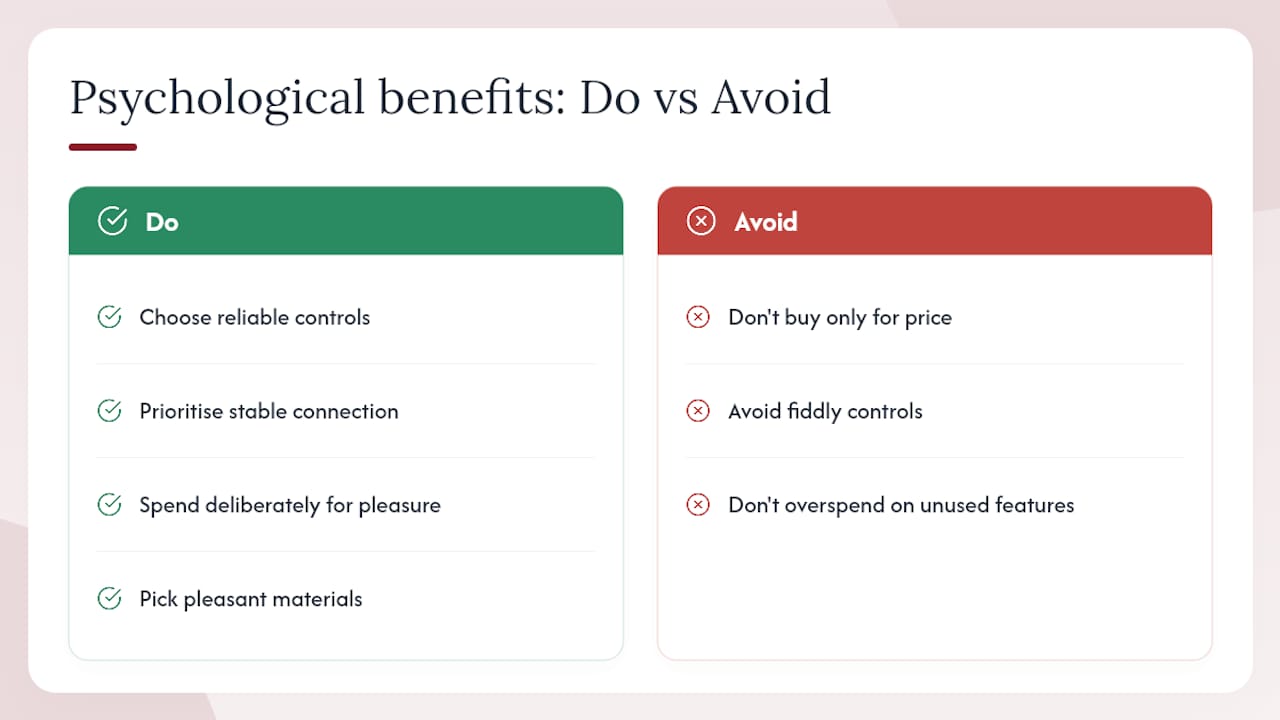
A toy that works reliably, feels good to hold, and doesn’t require fiddling with a stuck button in the dark removes friction from an experience that should feel effortless. That reliability builds a quieter form of confidence over time: you stop wondering whether tonight’s the night the motor cuts out, and you start actually being present. For couples using remote-controlled toys across distance, a stable connection isn’t just a technical feature, it’s the difference between feeling close to a partner and feeling frustrated by a lagging app.
There’s also a simpler emotional layer worth naming directly: choosing to spend on your own pleasure, deliberately and without apology, is itself a small act of self-worth for a lot of people. That’s not a reason to overspend on features you won’t use, but it’s a real part of why a well-chosen luxury purchase can feel meaningful beyond its function. The quality of materials matters here too. A toy that feels genuinely pleasant against the skin, rather than merely functional, changes the tone of the whole experience from transactional to something closer to indulgent.
None of this justifies buying the most expensive option purely for the feeling of buying it. But it does explain why “it just feels nicer” is a legitimate part of the value equation, not a frivolous one.
Common misconceptions about luxury sex toys and the premium price
The biggest misconception is that price scales directly with pleasure. It doesn’t. As sexperts consistently note, a higher price tag does not automatically mean better sensation, and plenty of mid-range toys outperform overpriced ones with weak motors hiding behind premium branding.
A second misconception: that app connectivity and “smart” features are inherently worth paying for. They’re only worth it if you’ll actually use them. A toy with fifteen app-controlled patterns is worthless to someone who uses the same setting every time.
Third, people assume luxury toys are only for experienced or adventurous users. In reality, the toys most worth splurging on are often the simplest ones: a single, exceptionally well-engineered motor in a well-designed shape, rather than a toy trying to do everything at once.
Finally, there’s a persistent idea that expensive toys are inherently safer. Material safety depends on the material itself, not the price. A £20 toy made from medical-grade silicone is safer than a £150 toy made from an unlisted “jelly” blend. Read the material specification before you read the price tag, every time.
My honest take on where the money actually goes
Here’s the uncomfortable truth: most people who ask whether luxury sex toys are worth it are really asking whether they’ll regret an expensive purchase. The answer depends entirely on whether you already know what you like.
If you’ve been using toys for a while and you know you want deep, rumbly vibration rather than surface buzz, or you’ve tried a friend’s premium suction toy and felt the difference immediately, buy the luxury version without a second thought. You’re not gambling, you’re upgrading a known preference. But if you’re buying your first toy and hoping the price tag will tell you what you like, save your money. Buy something well-reviewed in the £30 to £60 range, learn your body’s preferences over a few months, then spend on the luxury version of exactly what you now know you want.
The warranty question deserves more weight than most buyers give it. A ten-year warranty on a well-built toy isn’t a marketing flourish, it’s a genuine hedge against the single biggest risk in this category: motor failure. Weigh that before you weigh the branding.
If you want a deeper look at any of Playhause’s buying guides mentioned here, they’re written to help you make exactly this kind of decision without pressure.
— Will
How Playhause makes finding the right premium toy easier
The selection focuses on helping remove guesswork when shopping for premium intimate products by highlighting those where quality and price align well, rather than leaving you to sort marketing spin from real engineering.

Orders arrive in plain, discreet packaging, and free delivery is often available over a certain threshold, which can make it easier to bundle items without pushing your budget further than planned. Buy-now-pay-later options may be offered at checkout, so a considered splurge doesn’t have to mean paying it all at once. If you’re building a complete evening rather than a single purchase, browse pieces like the Ballerina 800 Hold Up with Pheromones or the Beauty Night Lorna set alongside your toy of choice. Start at the Playhause homepage to browse the full curated range and find the option that actually fits how you’ll use it.
Sources
- Sexperts On What’s Actually Worth It At The “Fancy” End Of The Adult Toy Aisle
- What’s the Difference Between a $50 and $200 Sex Toy? | The Strategist
- Best luxury sex toys (editorial testing) | GQ