


A well-chosen ball gag is safe for most beginners when nasal breathing stays clear, you’ve agreed a non-verbal safe signal beforehand, and your first sessions are short. Before anything else: check that your nose is unblocked, decide on a hand or object signal you’ll both recognise, and pick a small, breathable gag rather than a large solid one. Read the step-by-step section below before you try one for real.
TL;DR:
- Beginners should choose a small, breathable silicone gag around 1.5 inches (38mm) in diameter for comfort and airflow, especially if new to restriction.
- Always verify that nasal passages are clear, establish a safe non-verbal signal, and limit initial sessions to under ten minutes to ensure safety.
- Regularly check the fit, breathing, and signs of distress every two to three minutes during use, and remove the gag immediately if discomfort or trouble breathing occurs.
- Proper hygiene involves washing silicone or rubber parts immediately after use and storing in breathable pouches, retiring gags with cracks or discolouration.
- Monitoring must be continuous with rehearsed signals, and avoid gag use when dealing with nasal congestion, dental issues, or jaw pain to prevent health risks.
Table of Contents
- What is a ball gag and why do people use one?
- Types and materials: what actually matters for beginners
- How do you choose the right ball gag size?
- Step-by-step: how to fit, monitor and remove a ball gag
- Safety signals and medical cautions you shouldn’t skip
- How long should a first session last?
- Cleaning, care and storage between uses
- Who’s behind this guide
- What beginners get wrong about ball gags
- Beginner-friendly gags and hygiene picks from Playhause
- Sources
What is a ball gag and why do people use one?
A ball gag is a rounded ball, usually attached to a strap, that sits inside the mouth and is secured behind the head. It’s one of the most recognisable pieces of bondage equipment, and its appeal has little to do with the object itself and everything to do with what it represents: a shift in control, a narrowing of focus, a quieting of speech that lets other senses take over. It muffles speech and increases a feeling of submission, which is exactly why many couples reach for one during power-exchange play.
On a first try, expect:
- Increased saliva production, sometimes a fair amount
- Muffled speech rather than complete silence
- A strong urge to test your jaw movement in the first minute
- A wave of vulnerability that can feel intense before it feels good
None of that means something has gone wrong. It’s simply what happens the first time your mouth is held open and your voice is softened.
Types and materials: what actually matters for beginners
Not every ball gag suits a first attempt. The biggest distinction is breathable versus non-breathable design. Breathable gags have small holes drilled through the ball, letting a little air pass even with the mouth closed around it. For beginners, a breathable silicone gag with air holes, or simply a smaller diameter ball, reduces jaw strain and keeps some airflow moving, which matters far more when you’re still learning how your own breathing responds under restriction.
Material choice affects hygiene as much as comfort:
- Silicone – non-porous, easy to sterilise, the most forgiving choice for sensitive skin
- Rubber – similarly easy to clean, though softer rubbers wear faster
- Leather straps – look striking but need dedicated leather care rather than soap and water
- O-ring or bit gags – hold the mouth open without a solid ball filling the whole mouth, useful if a full ball feels too much
If jaw strain is a concern, a bit gag or tongue-control style spreads pressure differently and is worth trying before ruling gags out altogether.
Pro Tip: Start with silicone. It’s the easiest material to clean thoroughly between uses and gives you one less thing to worry about while you’re still learning fit.
How do you choose the right ball gag size?
Fit is the single biggest factor in whether a ball gag feels manageable or miserable, and it’s measurable rather than guesswork.
- Measure your comfortable vertical opening. Open your mouth to a relaxed, sustainable width, not your absolute maximum, and note roughly how far apart your teeth sit.
- Check the strap tension. It should sit snug enough that the ball can’t be pushed out with the tongue, but you should still be able to slide one finger underneath it comfortably.
A 38mm starting point isn’t arbitrary. It’s small enough to avoid overstretching an untrained jaw, yet large enough to stay securely in place, which is why it shows up repeatedly across beginner sizing guides.
Watch for these warning signs that the size is wrong: audible jaw clicking, sharp pain rather than mild stretch, or any shortness of breath. Any one of those means stop, remove the gag, and reassess before continuing.
Step-by-step: how to fit, monitor and remove a ball gag
Getting this right the first time isn’t about confidence, it’s about sequence. Follow the same order every time until it becomes second nature.
Before you begin:
- Inspect the gag for cracks, worn straps, or damaged buckles.
- Wash your hands and make sure the gag is clean.
- Agree your non-verbal safe signal together, out loud, before anything goes in anyone’s mouth.
- Set a maximum time for this first attempt, ideally under ten minutes.
Fitting the gag: 5. Practise holding the ball in place without straps or restraints first, so your partner learns the sensation with an easy exit. 6. Rehearsing without restraints lets you both learn fit and breathing before adding any restriction, which removes a huge amount of first-time anxiety. 7. Once comfortable, position the ball between the teeth and secure the strap at a snug, not tight, tension. 8. Ask your partner to breathe through the nose and confirm it feels clear, using your agreed signal if speech isn’t possible.
During the scene: 9. Check in every few minutes using the non-verbal signal, and watch their hands and body language throughout. 10. Keep your eyes on their face; colour change, distress, or repeated signalling means stop immediately.
Removing the gag: 11. Unbuckle the strap first, then gently guide the ball out rather than tugging. 12. Offer water straight away and give them a moment before talking about how it felt.
Pro Tip: Keep the buckle within easy reach of your own hands throughout. A gag that takes twenty seconds to unfasten in an emergency isn’t safe, no matter how good the fit is.
Safety signals and medical cautions you shouldn’t skip
Speech is off the table with a ball gag in place, so your entire safety system needs to run on something else. Agree a physical signal before you start: a double tap on the partner’s leg, dropped hands if the wrists are free, or a squeeze toy held in one palm if hands are restrained too. Whatever you choose, test it once before the gag goes in, so nobody is guessing what a gesture means mid-scene.
Never leave a gagged partner alone, even for a moment. Set a check-in rhythm (every two to three minutes is a sensible starting point) and watch for pale or flushed skin, laboured breathing, or repeated signalling, any of which means stop and remove the gag immediately.
Some situations call for skipping the gag entirely rather than working around them:
- A blocked nose, cold, or sinus infection that forces mouth-breathing
- Known TMJ disorder or chronic jaw pain
- Recent dental work or oral surgery
- Anxiety about restriction that hasn’t been talked through beforehand
If any of these apply, treat that as your answer for tonight and revisit another time. Our guide to choosing and using safewords covers non-verbal alternatives in more depth if speech is likely to be off the table for other reasons too.
How long should a first session last?
Short is the whole point at the start. beginners typically manage short sessions comfortably, gradually increasing duration as comfort improves, and there’s no reason to push past that on your first few attempts. Build duration gradually across separate sessions rather than trying to extend one long scene.
- Check in physically every two to three minutes, watching hands, breathing, and colour
- Remove the gag the moment jaw fatigue, drooling discomfort, or anxiety shows
- Afterwards, massage the jaw gently, offer water, and talk through how it felt for both of you
- Seek medical advice if jaw pain or clicking persists after the session ends
Our aftercare guide walks through the emotional debrief side of this in more detail, which matters just as much as the physical check.
Cleaning, care and storage between uses
Hygiene keeps a gag safe to reuse, and it only takes a couple of minutes.
- Wash silicone and rubber balls with warm water and mild soap after every use
- Wipe leather straps clean rather than soaking them, and treat them with a proper leather conditioner occasionally
- Dry fully before storing, ideally in a breathable pouch rather than a sealed plastic bag
- Retire the gag once you spot cracks, discolouration, or a strap that’s lost its grip
Who’s behind this guide
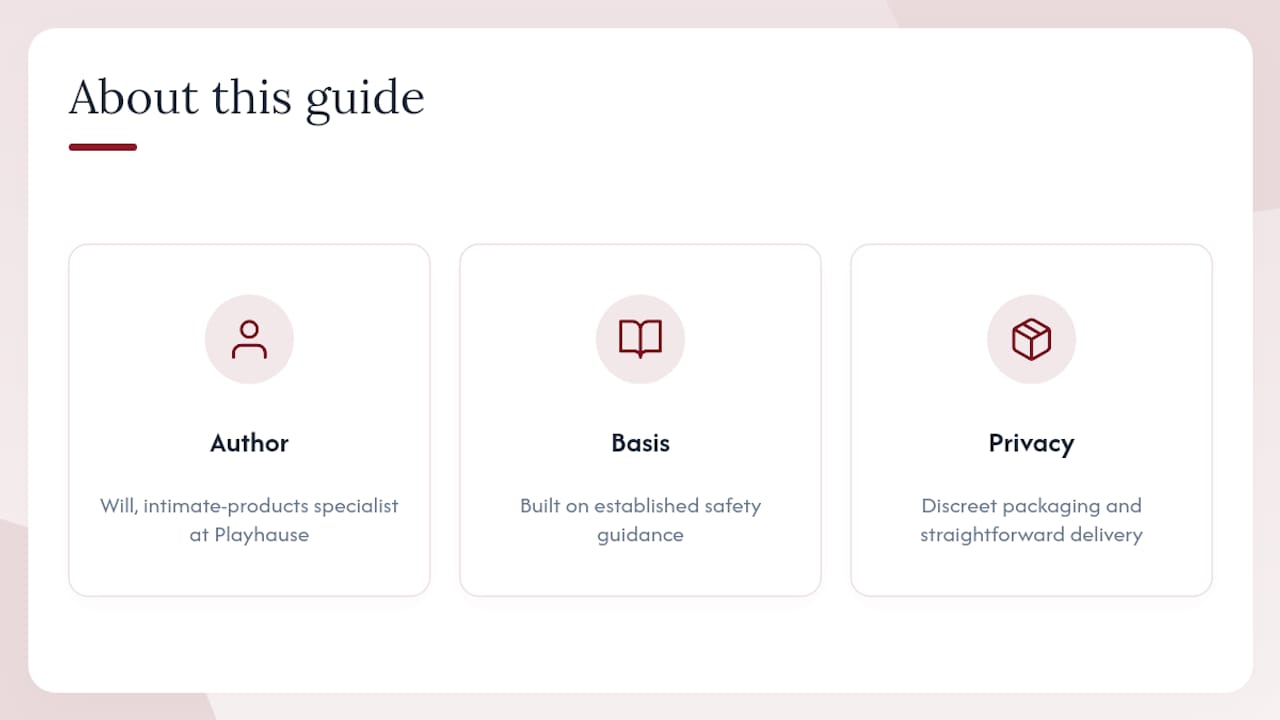
This guide comes from Will, an intimate-products specialist at Playhause, drawing on established safety guidance rather than guesswork. For further reading, see our companion pieces on introducing BDSM safely and bondage for beginners. Playhause backs its recommendations with discreet packaging and straightforward delivery, so trying something new stays private.
What beginners get wrong about ball gags
Most anxiety around ball gags isn’t about the gag itself, it’s about the lack of a plan. Conventional advice tends to focus heavily on the toy: which material, which colour, which brand. That’s the least important decision you’ll make.
What actually matters, based on everything above, is measurable fit and a rehearsed signal. A 38mm silicone gag tried on without restraints for two minutes, with a clear tap signal agreed beforehand, will do more for a nervous first-timer than any amount of research into gag styles. The size chart and the breathing check are what turn “I hope this goes well” into “I know what happens if it doesn’t.”
The other gap I’d flag: most guides treat monitoring as a one-off check at the start. It isn’t. A person can go from comfortable to distressed in under a minute once saliva builds up or a jaw starts to ache, so the two to three minute check-in rhythm matters more than the initial fitting did. Get the size right, agree the signal, then commit to watching, not just fitting and forgetting.
— Will
Beginner-friendly gags and hygiene picks from Playhause
Playhause stocks breathable silicone ball gags built with exactly the beginner priorities covered above: smaller diameters, air holes, and straps that adjust to a snug rather than punishing fit. Pairing a gag with proper cleaning supplies from the same order means you’re set up for hygienic reuse from the first session, not scrambling for the right soap afterwards.

Every order ships in discreet packaging, and orders over £60 qualify for free delivery, so building out a starter kit doesn’t mean multiple deliveries or awkward parcels. Browse the full range at Playhause to find a breathable gag sized for a first attempt, and check out alongside a set of Beauty Night Lorna Red or another piece from the lingerie range if you’re planning a full scene rather than a single toy. Start with the size guide above, pick your diameter, and add it to your basket today.
Sources
- Ball Gag Guide: 6 Tips for Safely Using a Ball Gag
- What Is a Ball Gag? A Guide to Being Ball Gagged Safely | Grindr
- Bedbible